Tuesday, July 4, 2023

The Look of Love's Warm Embrace


The Look of Love
. Photo: Christopher Duggan

There are many reasons to embrace The Look of Love by Mark Morris, a suite to songs by Burt Bacharach with lyrics by Hal David, which I saw at Jacob’s Pillow on June 29. Premiering in the wake of the pandemic in 2022, it’s anchored by human interaction on a mostly generous and affectionate level, in sync with Bacharach’s molten, gauzy harmonics. It employs just 10 of the Mark Morris Dance Group; the set is simply five colored chairs with cushions which the dancers move about. Isaac Mizrahi designed the production and the pop-hued tunics and separates. 

Ethan Iverson imaginatively arranged 14 of Bacharach’s songs, nearly all of which were huge hits. (He wrote one song, “The Blob,” to lyrics by Mack David, Hal’s brother; it seemed to be inserted as a kind of hilarious anchor to keep the bubbly work grounded.) The piece begins with a piano rendition of “Alfie,” intimate and searching, in keeping with the existential lyrics. To “What the World Needs Now,” the dancers pair off, a couple to a chair, the set now arrayed like a flower. Morris leans on shapes with right-angle geometry and simple steps like triplets, with arms flung wide. There’s a crispness to the whole work, from the rhythmic clarity underscored by the choreography, to the brilliant hot colors. 

The Look of Love. Photo: Christopher Duggan

Of course Morris injects humor now and then in nods to the lyrics. In “I’ll Never Fall in Love Again,” the dancers mime catching pneumonia, or shoving their partner. Iverson inserted a musical interlude, which briefly releases the movement from the narrative. In “Raindrops,” the dancers playfully hop, test for, and flick the rain, and in “Don’t Make Me Over,” the performers did a weird version of the Floss. “Do You Know the Way to San Jose” featured some of the most athletic and large-scale movement, with barrel leaps and right-angled arms pointing the way. Dallas McMurray and Billy Smith captured the eye with their clean, unmannered technique that nonetheless felt suffused with meaning. From time to time a dancer lifted another, but a repeating, clever kinetic exclamation took the form of cartwheeling onto another seated dancer’s knees, or the like. Less hoisting of meat and bones is good for all!

“Walk on By” included quick paces and pivots, and faces dropped into spread palms to convey melancholy and introspection. Grapevines in single and double time done by pairs holding hands, one facing upstage at times, couched “Always Something There to Remind Me,” while slow hand pushes, as if through mud, in lunges marked the drowsy pace of “Look of Love” (while McMurray lip synced upstage) and tiny arm flaps were the recurring motif in “Say a Little Prayer.” Morris often creates oddball moves that become signatures for dances or sections, but here, they’re less affected and are rather simple gestures, and are thus highly relatable. 

Singer Marcy Harriel has past singers' (mainly Dionne Warwick) big shoes to fill and handles the task wonderfully, accompanied by a small band led by MMDG Music Director Colin Fowler. The close proximity of the dancers to the audience in the Pillow’s Ted Shawn Theatre provided a greater intimacy and connection than the company often has in opera houses; it will soon perform repertory at the Joyce Theater (impossibly, for the first time) which will be even cozier. The songs’ nostalgia, crackerjack performers, and vivid production made me want to see it again. Here's wishin' and hopin'.

Wednesday, June 28, 2023

Competing with the Sun in Chatham

Mercuric Tidings. Photo: Steven Taylor

Being a choreographer is difficult. Carrying a choreographer's legacy is no easy task either, especially given that the company must remain relevant. 
In recent years, Paul Taylor Dance Company had been performing brief spring/summer runs in addition to its usual longer fall seasons at the Koch. The short series, at different outposts, had smartly focused on sub-genres—more experimental early Taylor work at the Joyce, or dances done to early or classical music at the Manhattan School of Music with the Orchestra of St. Luke's. Last year, PTDC was one of several major New York companies comprising a mini-festival at New York City Center. This year, it seems that the company has foregone a short New York run, instead touring. It returned to Chatham’s elegant, plein air amphitheater, PS 21, in June with a lively, if not particularly challenging program that included Mercuric Tidings, A Field of Grass, and Piazzolla Caldera.

During Taylor’s lifetime, an evening’s dances often fell into a three course menu-style format of opener with some oomph, a more thoughtful or dark work, and then a closer meant to dazzle audiences. In its weeks-long New York season, 20 or so dances might be featured, with each program usually different. While that is some tough logistical feat to plan, it meant that repertory could be mixed and matched and repeat viewers could see the spectrum of Taylor’s amazing output.

In contrast, a three-performance run at smaller venue such as PS 21 features one bill. So it might be even tougher to select which three dances to feature in order to best represent the company. The dances Artistic Director Michael Novak chose for Chatham are easy to digest, albeit each representing a unique Taylor subgenre.

Mercuric Tidings (1982) ranks among one of Taylor’s most demanding abstract dances, with lots of rapid-fire stage crossings and patterns, and luminous performances by Madelyn Ho and John Harnage. At the moment, the current company impresses most on a technical level, with formidable athletic prowess. That said, the demands of this dance reveal that it could use more rehearsal, with a few ragged ensemble sections and rough lifts. It opened the program, which means that it coincided—and fought—with a dazzling solstice sunset visible to most of the audience. The cyc lighting begins in a bright pink hue, and the intensity was so high—we’re talking a Robert Wilson level event—that it hurt my eyes. Maybe it was to counter the sun’s effects? Or maybe new technology has vaulted past the comfort level of the human eye.

Eran Bugge and Alex Clayton in A Field of Grass. Photo: Steven Taylor

A Field of Grass (1993), to a suite of songs by Harry Nilsson, is a humorous romp in which the performers are, in theory, stoned or tripping. Alex Clayton, toking, leads off with a rubbery solo, rolling in a folded leg position, and bursting aloft, at which he is so skilled. Christina Lynch Markham, one of the company’s current standout character dancers, flings her hip-length hair madly as she leaps with abandon. Mirrored sunglasses hide presumably dilated pupils. The style—unfettered and propulsive—is among Taylor’s more pedestrian and casual.

Taylor pushed his range choreographically with Piazzolla Caldera (1997), plucking tango quotes and mixing them in with social dancing. While this dance has always benefited from a crisp approach, especially by the men in the first movement, the current cast seems extra martial, with Lee Duveneck snapping his legs like whips. Jessica Ferretti puts her long limbs to use in the lonely woman solo, less angry than sad about being shunned than past interpreters. An inventive and acrobatic duet exemplifies a subset by Taylor in which the men seem to alternately tussle and caress one another. The lighting in Piazzolla, no longer battling the now set sun, felt murky rather than chiaroscuro.

The current company, relatively young on the whole, comprises skilled technicians who can handle the trickiest steps and the breadth of styles by Taylor. But at moments, it feels as if the dancers are executing steps harshly, with the main goal of hitting marks and keeping on top of things. I imagine that in time, personalities will emerge through the many character roles Taylor crafted emphasizing humor and wit, transcending the not inconsiderable technical demands.

I miss the darker theatrical repertory that balances out the lively, more athletic work which seems to prevail these days—Big Bertha, Speaking in Tongues, and The Word come to mind. Perhaps these will be rotated in soon, giving audiences a fuller picture of the choreographer’s creative imagination. And will the American Modern Dance project (commissioning outside American choreographers) continue now that Lauren Lovette is resident choreographer, or has the company pivoted away from that? Of course the pandemic and its insidious effect on the economy, and particularly the cultural sector, are weighty factors. The coming years will test even the oldest establishments. 

Tuesday, June 13, 2023

New York Notebook, June 2023

Gallim in state, presaging the Martianscape of June 7. Photo: Steven Pisano

I took in some shows just before the atmospheric invasion from the Canadian wildfires that transformed the city into a Martian hellscape, if briefly. While it was pretty terrible feeling, it wasn't yet nuclear winter nor a permanent situation. But it did garner attention from all the media outlets based in the city, who amplified future warnings about climate change... perhaps the one upside.

Ballet Hispánico and Gallim are staples of the New York dance scene, and both showed how they have carved out strong reputations in the most densely populated dance hub in the world.

Ballet Hispánico June 3, 2023 City Center

The program exemplified the company’s core values: telling the stories of varied Hispanic cultures, and displaying their skilled technique.

New Sleep Duet by William Forsythe tilted toward abstract and cool. Fatima Andere, paired with Antonio Cangiano, allowed a smile in contrast to the sangfroid usually assumed in Forsythe’s ballet works. They performed the angular style with a lush plasticity.

Papagayos by Omar Román de Jesus is a surreal parable on power and its privileges and abuses. Amanda Del Valle conveyed a manic energy as a parrot in a shiny fringed jumpsuit who sought her hat—the token of power in a deadly game of musical chairs. Despite her show biz disposition, it carried shades of a nihilistic Ionesco story.

Ballet Hispánico in Sor Juana. Photo: Erin Baiano

In Sor Juana, Michelle Manzanales pays tribute to a complex historical figure—poet, feminist, nun, scholar, with the lithe, elegant Gabrielle Sprauve in the lead. Moving solos and duets are sandwiched between sections of movement for the ensemble, who stay in the same formation for too long. The striking costumes (by Sam Ratelle) change from formal colonial dresses to a nun’s habit to minimal bodysuits and trunks.

Pedro Ruiz celebrates Cuban music, social dance, and cigars in Club Havana. There’s plenty of partnering with lifts of all kinds, and somewhat forced, dated air of jollity and machismo/coyness, but it’s a solid, audience-pleasing closer.

Gallim in SAMA. Photo: Steven Pisano

Gallim, Joyce, June 4, 2023

This packed program encompassed Gallim’s talent and range, led by choreographer Andrea Miller.

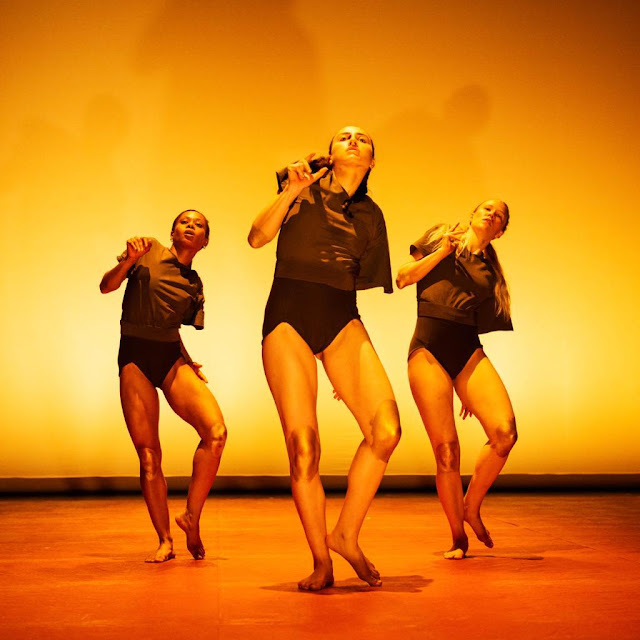
The trio state begins with the smallest movements, mesmerizing tiny steps and direction shifts, danced by Emma Thesing, Vivian Pakkanen, and India Hobbs. These train your focus and show that even the most minute, highly controlled movement can be expressive. Middle sections allow for big, traveling steps and leaps. Jose Solís designed the smart costumes: slate tunics, blousy on top with fitted briefs and iridescent knee patches.

Sydney Chow and Gary Reagan performed a slapstick tour de force and affably wrassle like kids for dominance of a sofa in Castles, an excerpt of a full-length work, Fold Here.

No Ordinary Love, another remarkable chamber piece, was danced by Chalvar Monteiro and Issa Perez. They delivered the fluid, powerful, and impassioned choreography with great skill, making me wonder how humans could possibly be so beautiful and poetic.

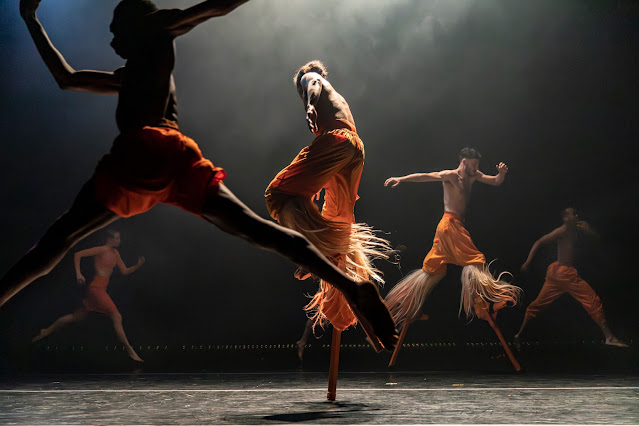
SAMA—by Miller in collaboration with Rambert II and Gallim—is an explosive closer that builds to a fever pitch. It includes acrobatic dancers on stilts doing kicks, plus a cavalcade of unfettered leaps and twists, and dynamite ensemble sections in formations, plus smaller pullouts. A crowd-rousing finish to a dense program.


Tuesday, February 7, 2023

Reading Fiction while Being Asian

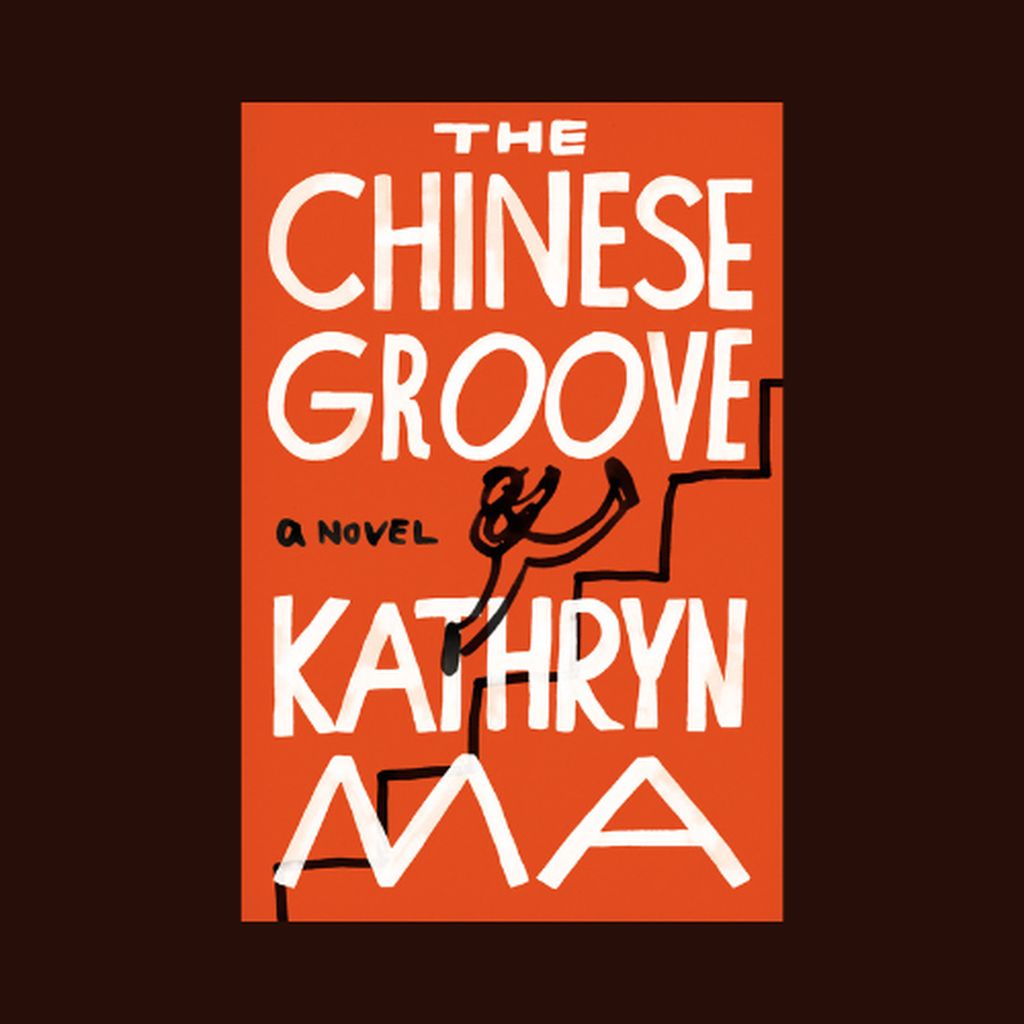
In the entertaining novel The Chinese Groove, Kathryn Ma glides between memories of the main character Shelley’s childhood in Gejiu, China, and his new, hard-won life as a college student in San Francisco. The titular groove is the invisible stuff binding his native country’s people, a kind of glue of guilt, culture, respect, and debt.

Shelley narrates with the loose, contemporary jargon of a quick learn, a hustler, and a survivor. And Ma puts in writing something that has gnawed at me for years while reading fiction:

        Ted handed a menu to Kate. “You choose for us.”

Kate protested, they should choose together, but the others insisted that Kate take charge. She spoke to the waiter, and I was impressed because her Cantonese wasn’t half bad. She told me that she’d learned to speak it from her grandparents who’d emigrated from Toisan. For me, it was a side dish language—nice to sample but not the main meat. Kate was Chinese. I forgot to earlier mention. She was ABC, born in Los Angeles to second-generation Chinese American parents who’d grown up in Chinatown. I’m sorry if I confused you. Take all the time you need to make the necessary adjustment. Believe me when I say that I didn’t neglect to tell you out of teasing or spite. When someone is telling me a story, I naturally assume that the people in it are the same race as I am, for isn’t it human nature to imagine the story and picture like kind? Please forgive my clumsiness, also my starting and stopping. I’m not like Father, who used to tell his stories as smoothly as oil spreads in a pan, though Father wasn’t burdened with making these fine distinctions because everyone he described was a countryman start to finish. It’s awkward to have to stop and pinpoint: this person is such-and-such, that person is fill-in-the-blank, but that’s the world we live in. You can’t avoid labels. By the way, Orit was white and, like Aviva, Jewish. You might’ve guessed from her name. Orit Hazan, Kate Choy, Leo Choy Hazan. Jews, I noted, sometimes held themselves apart. They knew what it was like to be treated as different. Orit grew up in Israel, which was another thing altogether. Have I left anyone out? Ted was Christian, I think. He didn’t go to church, but his mother had. Leo was mixed-race; Orit was his mother and younger than Kate. His father was Chinese—an unknown Chinese stranger. Imagine the auntie discussion that fact would’ve provoked! In Orit’s work, Talmudic.

       —The Chinese Groove, by Kathryn Ma, Counterpoint Press

This idea has come to mind repeatedly over time, in various mentions of a minor character’s Asianness, for no obvious reason than to “flavor” a scene with a note of the exotic, or foreign, or hip/bohemian, or impenetrability. This, while few other (except Black) characters’ ethnicity are mentioned, presuming whiteness on the part of the reader.

And I get it. Asians make up only a small percentage of Americans, and we’re not long past a time when there were laws against Asians entering the country. So I realize it’s not overt racism, but a kind of structural racism that still casts Asians as Others, even if we were born and raised in the US. If you have grown up Asian in a white majority community, you are no doubt familiar with the question, “But where are you really from?,” many times over—which got a British royal into muy hot water recently, eliciting her resignation from official duties. I thought, really? I can’t even tell you how many times I’ve been asked that in my life after at first answering Connecticut. You learn to roll with it after being embarassed for both yourself and the asker. But it’s not meant to be racist, it's just curiosity and ignorance.

With so much awareness now on identity and DEI, I think it’s getting better. Just that Ma included this passage means a ton, particularly in the meandering way she takes a beat, breaks the fourth wall, so to speak, and muses aloud what she and many Asians have thought while reading fiction. She also takes it to a hilariously thorough level, underscoring how ludicrous a conceit it is. 

A big round of applause for Ma, and also for The Chinese Groove on the whole. It muses on how divergent cultures and antagonistic family members can find common ground in this zany country.

Saturday, December 31, 2022

Best Books of 2022

Exceptional books from 2022

FICTION

Trust, Hernán Díaz
Dimensional takes on one tale. The book’s first part feels slightly lackluster, but Díaz’s structural pivot halfway through dazzled. The different points of view remind us that there is no wrong interpretation.

Search, Michelle Huneven
The subject sounds dry as dust: the search for a new pastor. But Huneven’s delectation in the nitty gritty details of the search offer an optimistic way to savor the quotidian. She adds another layer with recipes.

The Lincoln Highway, Amor Towles (published 2021)
The title misleads; it isn’t a boring historical tract, but an engrossing caper with Huck Finn heroics and a satisfying plot twist to provide a sense of justice.

Vigil Harbor, Julia Glass
Bobbing between straight-up fiction and sci fi, a densely plotted novel that takes place in pandemic era Massachusetts examines a community through multiple characters and a dash of the supernatural.

Tomorrow, and Tomorrow, and Tomorrow, Gabrielle Zevin
I’m not a video gamer, but that discipline is the spine of this novel that follows a brilliant game designer through her personal life, which is far less clear than her coding. A modern version of an artist’s struggle and achievement.

Mecca, Susan Straight
A glimpse of So Cal people on the fringe of citizenship doing the work that keeps the dream alive, and the sacrifices and indignities suffered in daily life. A refreshing, less explored viewpoint.

Olga Dies Dreaming, Xóchitl González
Contemporary, successful Brooklynite siblings of Puerto Rican heritage confront varied scenarios, including a rebel absentee mother, a devastating hurricane, and the vicissitudes of political quid pro quos.

Still Life, Sarah Winman
Found families can sometimes be closer than blood relatives. Still Life stitches relationships between unlikely friends, across boundaries, during war time. Art transcends time and actual borders, and kind gestures merit astounding rewards.

Fellowship Point, Alice Elliott Dark
The main character is a strong-minded elderly woman writer, in itself a rarity, and her more traditional best friend. Questions the proprietorship of land, works of art, and one's self.

The Latecomer, Jean Hanff Korelitz
A bevy of unlikeable characters is partly redeemed by the titular character. Korelitz, who wrote The Plot, is highly skilled with storyline.

Sea of Tranquility, Emily St. John Mandel
St. John Mandel navigates the fine line between sci-fi and fiction, outlining a future of interplanetary commutes, where sounds can resonate between generations. She manages this with economy—no small feat.

NON-FICTION

Visual Thinking, Temple Grandin
The premise is scary—our country can’t make things anymore, in part because our education system has discouraged visual thinkers by setting Algebra 2 as a roadblock. Fascinating and kind of depressing, but Grandin puts forth ways to move forward.

Serenade, Toni Bentley
Bentley explicates this essential ballet by Balanchine to Tchaikovsky’s score, while reminiscing on her own life at New York City Ballet. Every phrase of the dance is rich with meaning, made real through the artist/dancer.

The Impossible Art, Matthew Aucoin
This director/author elucidates the art of opera, a form I’ve found difficult to fully embrace. He also examines some of his own work and finds it wanting, which feels noble in this time of self-importance.

Tuesday, December 20, 2022

Dance, Macro to Micro

Are You in Your Feelings?, photo by Paul Kolnik

Alvin Ailey American Dance Theater at New York City Center

Choreographer Kyle Abraham is completely relaxed in his working process, picking and choosing small gestures that ground his dances. One of the most memorable moves in Kyle Abraham’s new dance, Are You in Your Feelings?, is a rhythmic paddling of arms, a kind of relaxed speed walking thing, repeated for a spell by a group of women. It’s so relatable that I found myself rocking my arms while walking recently, smiling at the thought. While this penchant for quoting everyday intriguingly relates him to the Judson movement, he braids in bravura passages to create a unique, completely contemporary language.

This premiere for the Ailey company during its month-long City Center run uses soul, R&B, and hip-hop music. The sections of dance, to 11 songs, are connected by casual banter and flirtatious interactions among the dancers. Abraham’s style flows like silk, enhanced by the performers’ gossamer bomber jackets and loose pants by Karen Young. Certain steps evoked classic Ailey, such as a woman standing on a man’s knee, as in Revelations. Humor threads throughout—knees knocking, duck walks, remarks like “she pulled a me on me!” The recurring theme of courtship and its pitfalls set the tone, with sidebars including two men finding affection but hiding it due to societal pressure, and gender bonding.

A women’s section to “I’ll Call You Back” contained the infectious arm paddling, plus lots of hypnotic subtle upper body work. Other songs included a remix of “I Only Have Eyes for You” and Lauryn Hill’s “Forgive Them Father.” The set, uncredited, is a simple but striking arc of neon, with lighting by Dan Scully. Are You in Your Feelings? feels like a coda to An Untitled Love at BAM last February—both pop culture slices of daily life. The Ailey dancers look fantastic and at home in Abraham’s choreography, which is growing into an admirable body of work danced by his own group and major companies.

On a program of “new” work, Ailey also performed Duet, by Paul Taylor (from 1964)—a brief, gem-like kinetic puzzle in which no movement is wasted. In the opening pose, the pair resembles a perfect modern sculpture, Renaldo Maurice hovering over a seated Jacquelin Harris, their arms forming an oval. Courtly, with clockwork precision, every pose is picture perfect. (The choice of repertory is also a reminder of Artistic Director Robert Battle’s choreographic lineage; he danced and choreographed with David Parsons’ company for many year, and Parsons was once a Taylor dancer.) Another old new work, Survivors, depicted Nelson Mandela's jailing and his wife Winnie's taking the mantle. To an intense drum track and score by Max Roach and Peter Phillips, this work—originally from 1986, created by Ailey and Mary Barnett—showed how Ailey's style was classical jazz, with its four compass points and boxy arms.

Jamar Roberts’ premiere, In a Sentimental Mood, showcased Courtney Celeste Spears and Christopher R. Wilson as a couple in a fraying relationship, reliving romantic memories. The two dancers wrung fervent emotion from the expressionistic, albeit mostly upright, movement, set to Duke Ellington and Rafiq Bhatia. The design, also by Roberts—a sparsely furnished, traditional living room and street clothes—veered to the literal in this bittersweet work.

Rivulets. Photo: Maria Baranova

Tere O'Connor at Baryshnikov Arts Center

On a completely different scale, the Baryshnikov Arts Center presented the premiere of Rivulets by Tere O’Connor, a comprehensively conceived work of art bursting with his vision. Audience members sit on two sides of the stage close enough to touch the eight dancers; benches line the other two sides where non-active dancers wait to re-enter. The opening tableau is a bit of an anomaly within the piece; from two seated dancers trail chains of others, descending to the floor. Over a densely packed hour, the performers coalesce at the center, expanding outward, or pair off for unique duets. There are quirky bits, like monster hands and low-angled arms, that intersperse with more lyrical, space-eating steps. 

I was close enough to count stitches on their terrific, primarily green and blue-hued costumes by Reid Bartelme, which included first layers of one-piece tights and trunks that appeared to be knitted as a single piece, swingy outer garments, and square silver hardware that added some jewelry-like flair. O'Connor's score for the piece—a melange of piano, synth, and ambient—fulfilled its presumable mission to provide background sound and texture. 

With its theatricality, extensive production elements, and superhero dancers, Ailey represents the maximal possibilities of dance. Viewers whoop, clap, and scream at the top of their lungs in curtain calls (and sometimes during dances). By contrast, BAC’s presentation of Rivulets is the polar opposite—serene, at moments, intimate, literally within reach, and well-crafted, technically challenging, and incredibly rich, choreographically. In a given week in the city, what fortune to see such range.

Saturday, November 19, 2022

Lovette Delivers at Taylor; Alex Katz at Guggenheim; Transverse Orientation at BAM


John Harnage in Solitaire. Photo: Whitney Browne

"Taylor—A New Era" 

These simple, clear words headlined the cover of Paul Taylor Dance Company’s Playbill for its 2022 fall run at the Koch Theater. Since the later years of the founding choreographer’s life (he died in 2018), under the leadership of Artistic Director Michael Novak, the organization has been trying out different strategies for moving forward without new work by Taylor. After a confusing tango with the Paul Taylor American Modern Dance umbrella (begun by Taylor himself) under which a varied slate of American choreographers were commissioned to create new works on the Taylor dancers, things seem to have reverted back to the old PTDC moniker, or simply Taylor.

Branding aside, the programming concept has certainly evolved. The Orchestra of St. Luke’s continues to be the house band, but this time, it performed musical selections with no dance on a handful of programs. While I enjoyed hearing excerpts of Philip Glass’ The Hours by the orchestra, I couldn’t help feeling that it was a bit of a wasted opportunity to showcase the talented dancers who were backstage. Nonetheless, it highlighted the importance of live music to the company.

On a bright note, Lauren Lovette’s premiere of Solitaire is further proof of her creative talent, and that naming her resident choreographer for five years was a wise choice by Novak, if somewhat of a gamble. Substantial on many levels, Solitaire featured the crisp, elegant John Harnage in the sort of poet-on-a-journey role not unfamiliar to fans of Taylor’s oeuvre. It is set to music by Swiss composer Ernest Bloch, with dramatic string sections and a sense of gravitas and impetus. Santo Loquasto designed costumes and the set, which included an ominous diamond-shaped element that loomed like a guillotine over a serene mountainscape, descending and rising.

But what pops is Lovette’s facility with making modern phrases that flow organically, but which challenge the skilled company’s technical chops seemingly beyond what most of the repertory has until now. That’s not to say that Taylor’s vocabulary is not challenging, but Lovette’s accomplished ballet career heretofore has likely seeped into her movement—in the best way. It’s not ballet, but there’s an integrity and underlying structure that comes across. She has also found a way to convey an unspecific narrative that feels like a rich story waiting to be written. Solitaire was sandwiched between Taylor’s joyful, bittersweet Company B and Syzygy, a study in freneticism done in a completely different vocabulary, forming a satisfying slate with breadth.

Shawn Lesniak and Jada Pearman in The Green Table. Photo: Ron Thiele

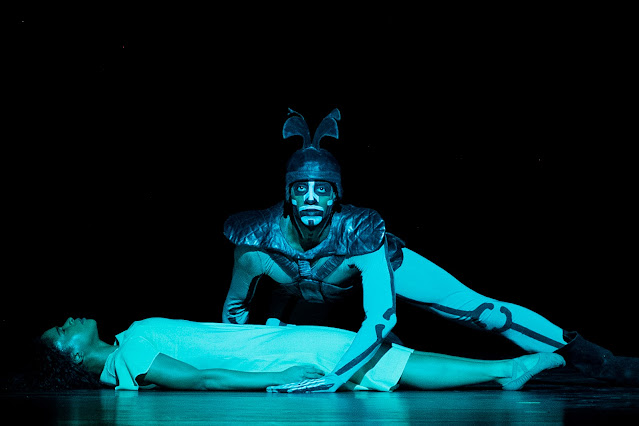
Speaking of which, the season included Kurt Jooss’ The Green Table, another example of the expansion of the troupe’s artistic horizons. (It had been remounting classics of American modern dance in pre-Covid seasons, but not by international artists.) This classic 1932 work about the senselessness of war, and how it is wrought by those far from the battleground, remains timeless and gut-wrenching. It makes sense for Taylor to take on this legendary dance, with its muscular phrasing and trenchant messaging. A bonus was seeing Shawn Lesniak in the role of Death (once danced by Jooss himself), carving sharp swaths, and forming perfect, machined angles with his long limbs. In other dances, without the lavish mask, makeup and headdress, I could see Lesniak’s gifts anew, and look forward to seeing him in more and more big roles.

Madelyn Ho and Alex Clayton in Syzygy. Photo: Whitney Browne

As much as (most of) the previous generation of dancers is missed, it is a pleasure to become acquainted with the new one. The dancer who seems to now be the most cast, at least in prominent roles, is Madelyn Ho, who was in everything I saw over three programs. She counters her small size, which might be less visible to the uppermost seats, with an extra dash of verve and joy. She dances with delicacy and articulation, plus ferocity and athleticism. Arden Court showed off many of the newer men—the explosive Alex Clayton, a soaring Devon Louis, and the sheer joy of Austin Kelly.

Maria Ambrose, John Harnage, Shawn Lesniak, Jada Pearman,
Kristin Draucker in Polaris. Photo by Ani Collier

Alex Katz—Gathering, Guggenheim Museum

The season coincided with Gathering, a Guggenheim retrospective of Alex Katz’s work, who designed many works for Taylor. Two outstanding Taylor/Katz collabs from the 1970s—Polaris and Sunset—were performed on the season finale program. Both display Taylor’s varied genius. Polaris, in which the same movement is performed by two different casts, with varied music, lighting and mood, rendering two completely unique dances; and Sunset, with its lush, romantic score by Elgar (plus loons), its old world approach to flirting and courting, and the contrasting depiction of an unrequited bond between two soldiers.
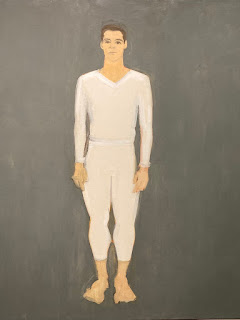
Paul Taylor, by Alex Katz

Katz’s show at the Guggenheim includes a portrait of Taylor, as well as a painting of the company performing. It’s hard to say what makes Katz’s work feel so quintessentially American—the distinct light, the flat expanses, the reductive line and composition, or all of the above? The exhibition includes some of his more intrepid experiments, such as painted aluminum cutouts (he created a bunch of dogs like this for Taylor’s Diggity) and repeated images of his wife Ada within one picture. The coincidence of his retrospective with a featured spot in the Taylor season underscored the artist’s continual output in the last half century.

Transverse Orientation, BAM

BAM presented Transverse Orientation by Dmitris Pappaionnou, whose Great Tamer had been shown a few years ago. The big imprimatur for Pappaionnou was that he was the first choreographer to be commissioned by Tanztheater Wuppertal Pina Bausch after her sudden death, as well as creating the opening ceremony for the 2004 Athens Olympics. So many artists have been influenced by Bausch, but most have been careful to avoid direct quotes. But Pappaionnou took the plunge with Transverse, inserting vignettes evocative of Bausch—a woman transformed into a fountain, and a giant wall built of foam blocks which toppled forward. Somehow it felt okay, as if enough time has passed, and because he has collaborated with TWPB. Tanztheater lives, and this iteration felt like a proper homage to Bausch and another phase in the form's continuum.

I can’t say enough about the main protagonist in Transverse, a life-sized bull puppet designed by Nectarios Dionysatos. The dancers skillfully manipulated the bull’s head so as to act as how I imagine a bull would, although it was more Ferdinand than raging. Others moved his hooves and tail, also amazingly expressive. The bull served as a sort of id to man’s ego, represented in oft-naked performers. 

The piece is constructed of many scenes, most short and some quite long, that evoke a range of sensations—humor, awe, absurdity, pathos, and so on. Magically, images crystallize from thin air, as a madonna-like woman cradled in a sheaf, bearing a dripping object that turns out to be a baby. She is subsumed into the stage floor, which is torn up to reveal a lagoon. A man swabs at the pool futilely with an old mop. I thought of melting permafrost and our inability to take action in the face of an existential crisis. And then walking to the subway past the Opera House's load-in doors, where the lagoon was draining onto Ashland Place, of the magic of theater to deliver such messages.